

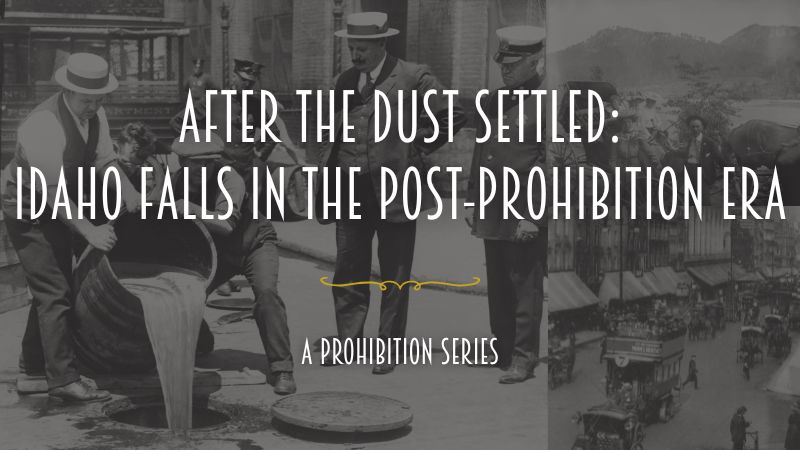
When the 21st Amendment repealed Prohibition in December 1933, Idaho Falls found itself at a crossroads. For nearly two decades, bootlegging, smuggling, and secret bars had been part of the city’s hidden fabric. But now, the underground world was forced into the light as Idaho and the rest of the nation returned to legal liquor.
The transition wasn’t immediate or seamless. Many of the city’s former bootleggers saw opportunities to go legitimate—applying for licenses, opening bars, and transforming former speakeasies into recognized businesses. Establishments that once thrived in secrecy now competed in a regulated market, with some former outlaws becoming respected bar owners and distributors. The same entrepreneurial spirit that kept liquor flowing during Prohibition now fueled a new era of legal enterprise.
But the cultural aftershocks ran deeper. Prohibition had left its mark on the community’s identity—instilling both pride in its rebellious past and caution from years of evasion and distrust of authority. Stories of midnight runs, hidden basements, and quiet deals became part of local lore, passed down through families and woven into Idaho Falls’ sense of grit and resourcefulness.
City officials faced their own challenges. Transitioning from enforcing a ban to regulating a legal market required new policies, oversight, and a recalibration of law enforcement priorities. Some lawmen who once cracked down on bootleggers now worked alongside business owners to ensure compliance with new liquor laws—a strange twist that highlighted the complexities of the era.
Economically, the end of Prohibition injected new vitality into Idaho Falls. Legal bars, distilleries, and distributors created jobs and generated tax revenue. Venues that once operated in whispers now advertised openly, and the city’s nightlife evolved into a more vibrant and visible part of its identity.
Today, Idaho Falls remembers its Prohibition past not just as a chapter of defiance, but as a testament to resilience and adaptation. Modern-day establishments—like The Soiled Dove—echo this history, celebrating a time when the city’s determination kept spirits high, even when the law said otherwise.
Credits:
This story is part of The Underground Files, an ongoing historical storytelling project by The Soiled Dove.
Research and writing by The Soiled Dove Historical Society.
Special thanks to the Idaho Falls Public Library’s Local History Collection and the Museum of Idaho Archives.
Finalized and archived in The Underground Files, 2025.