

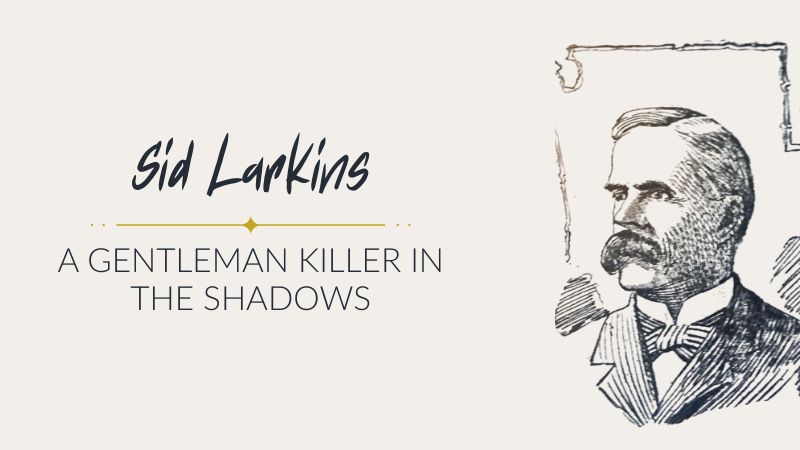
James Sidney Larkins—known to most as “Sid”—was the kind of man newspapers loved to romanticize. A card dealer, gambler, and drifter, Sid cut a sharp figure: good-looking, expressive, and brooding. But beneath the gentleman’s exterior was a man driven by obsession and an unrelenting need to control the woman he could never fully possess: Josie Hill.
Sid first met Josie Hill in Salt Lake City sometime before June 1891. At the time, she was living and working in a house of sex work on State Street. When Ed Callahan, a wealthy man known to be flaunting a roll of bills, was shot and killed during a late-night buggy ride with Josie near the hot springs outside Salt Lake, suspicion naturally swirled. At least eight suspects were considered, but Sid—though not initially named—was rumored to be one of the men who may have helped orchestrate the ambush.
In 1892, Josie and Sid both appeared in court proceedings related to the murder. Josie’s name headlined the Salt Lake Herald, but Sid’s name surfaced in the margins—suggesting proximity if not direct involvement. Whether he was a shadowy accomplice or just a man infatuated with the wrong woman at the wrong time remains unresolved. But they lived together shortly after the murder, and wherever Josie went in the years that followed, Sid was never far behind.
They attempted to settle into a semblance of domestic life. Sid earned money dealing cards in gambling halls, while Josie remained in sex work—often pressured by her mother to continue. Frustrated with her mother’s interference, Sid even paid her fare to Ireland, hoping to send her away for good. But her mother took the money and never left. The emotional toll proved too heavy. Josie fled Salt Lake, tried to start fresh in Boise at her mother’s urging, and eventually returned to Idaho Falls in 1894—hoping the rugged isolation of a remote railroad town might offer some peace.
Sid followed.
In Idaho Falls, Josie rented a room on what locals then called Soiled Dove Island. It was a narrow piece of land in the Snake River, home to two buildings: the city jail and a house of ill repute. Sid found her there and resumed his manipulative, jealous pursuit. In late 1895, he beat her, was jailed briefly, released, and then threatened her life. She dared him to do it.
On Christmas morning, 1895, he did.
After losing at cards in the Exchange Saloon, Sid borrowed a coat, stole a pistol from behind the bar, and walked across the icy bridge to the island. He entered Josie’s room and said, “You remember what I told you last night.” Josie, exhausted, replied, “Then do it.” He shot her in the back.
She didn’t die immediately. Josie lingered nearly two weeks before finally succumbing to her wounds. Meanwhile, Sid fled but was captured within a day, hiding in brush four miles from town. The revolver was recovered from the frozen river where he had tried to discard it. He had also attempted to slit his throat but failed, suffering only superficial wounds.
In the days that followed, the public learned that Sid had pawned his gun days before the shooting, leading to speculation about premeditation. In the courtroom, he tried to plead temporary insanity and swore it was a crime of passion. He repented in jail, was baptized, and wrote tearful confessions to the press warning young men of “whiskey and dissolute women.”
But the law had heard enough.
In 1897, after failed appeals, Sid Larkins was sentenced to hang. On April 30th at 1:07 a.m., he dropped through the gallows floor with a rope around his neck.
Newspapers hailed him as a model prisoner and a gentleman to the end. But others, like Idaho Falls reformer Rebecca Brown Mitchell, reminded the public that Josie Hill lay in an unmarked grave while flowers were left on Sid’s cell door.
Today, that same island in the Snake River—once known for scandal and violence—has become a tranquil park called the Japanese Friendship Garden. The bridge has been rebuilt. The jail is gone. And the stories remain, whispered beneath the cherry blossoms.
Credits + Sources:
Salt Lake Herald, February 10, 1892
Idaho Falls Times, Dec. 1895 – April 1897
Transcripts from the 2024 Untold Stories event at The Soiled Dove, with Museum of Idaho staff Chloe Doucette and Jeff Carr
Rebecca Brown Mitchell, “Defense of the Ladies,” 1897
Idaho State Supreme Court Records, 1896–97